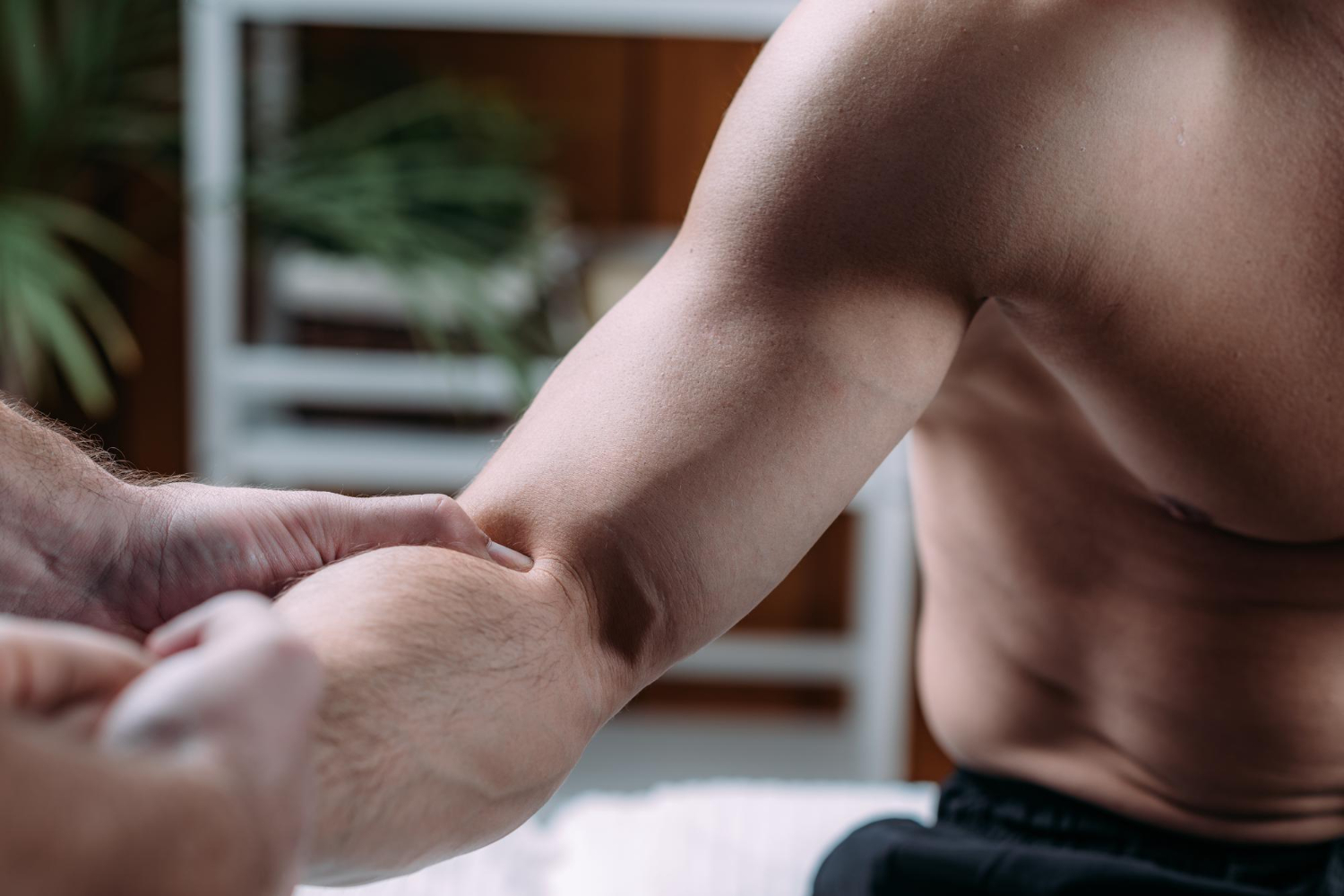
Tennis elbow (also known as lateral epicondylitis) affects around 1% to 3% of adults. While symptoms often improve over time, they can recur, particularly when contributing factors are not adequately addressed.
Tennis elbow is a common condition that Vitruvian – Italian Physiotherapy Center treats in office workers, tradespeople, gym-goers, and racquet sport participants in Dubai. Tennis Elbow Treatment Dubai may involve addressing both symptoms and the factors contributing to tendon overload.
What Does Tennis Elbow Feel Like?
Tennis elbow often produces discomfort on the outside of the elbow, which may develop gradually over time. While some people develop symptoms after playing tennis or pickleball, many develop them in association with work-related activities, repeated lifting, gym training, or prolonged computer use.
Common symptoms include:
- Pain on the outside of the elbow.
- Pain from grasping objects.
- Discomfort while opening jars or twisting doorknobs.
- Pain while lifting a coffee mug or shopping bag.
- Reduced grip strength.
- Pain that intensifies with repeated activity.
Symptoms may initially appear during exercise or other demanding activities. Some people may also experience discomfort during everyday activities.
If these symptoms sound familiar, addressing the condition early and gradually restoring the tendon’s capacity to tolerate load is important.
What Is the Best Treatment for Tennis Elbow?
Elbow discomfort can interfere with daily activities, and you may initially reduce arm use or seek hands-on care such as massage therapy or physiotherapy. When considering the best tennis elbow treatment in Dubai, it is important to recognize that while rest and passive treatments may provide short-term symptom relief, they may not be sufficient as a long-term rehabilitation strategy.
Current evidence supports exercise-based physiotherapy, particularly progressive strengthening, as an important part of tennis elbow rehabilitation. Manual therapy may also be used alongside exercise when clinically appropriate.
What Is Tennis Elbow and Why Does It Happen?
Despite its name, tennis elbow is not limited to tennis-related activities. People who work at a desk, type regularly, perform repetitive lifting, or engage in repetitive activities may be more likely to develop the condition.
So, what structures are involved? Tennis elbow is often associated with changes in tendon tissue, commonly described as tendinopathy or tendinosis, rather than being caused solely by inflammation. These changes can reduce the tendon’s tolerance to physical load, making previously comfortable activities painful.
Why Tennis Elbow Keeps Coming Back
One reason tennis elbow may recur is the lack of a gradual return-to-work or return-to-sport plan. A common example is a person whose elbow discomfort improves temporarily but returns when they resume pickleball, golf, gym training, or other demanding activities.
The discomfort may return because the tendon has not been gradually reconditioned to tolerate the demands of the activity.
What Actually Works for Tennis Elbow Treatment
Effective tennis elbow rehabilitation involves a thorough approach:
Reduce Pain and Irritation:
Vitruvian – Italian Physiotherapy Center may begin by adjusting activity levels and using manual therapy when appropriate to help reduce elbow discomfort and improve function. This approach may be particularly relevant for people looking for Tennis Elbow Pain Relief Dubai focused on reducing symptoms and improving function.
Progressive Strengthening:
Progressive loading is an important part of rehabilitation. Eccentric exercises may help the tendon gradually adapt to increasing demands.
Restore Movement and Joint Function:
Vitruvian – Italian Physiotherapy Center also evaluates movement restrictions throughout the upper limbs and addresses relevant impairments through treatment. The elbow does not function in isolation. Restrictions in the wrist, shoulder, neck, or upper back may influence how force is transferred through the arm and can contribute to ongoing symptoms. Improving joint mobility and movement quality can support the restoration of normal movement and tendon load tolerance.
Why Vitruvian – Italian Physiotherapy Center Assesses More Than the Elbow
Assessment of tennis elbow should consider more than just the elbow. While the affected tendon is central to the condition, other factors can increase stress on the elbow and make recovery more difficult.
As a result, Vitruvian – Italian Physiotherapy Center’s assessment does not end at the elbow.
Vitruvian – Italian Physiotherapy Center also evaluates:
- Wrist flexibility and strength.
- Grip mechanics.
- Shoulder strength and control.
- Rotator cuff function.
- Neck and upper back mobility.
- Workstation design and ergonomics.
An athlete with reduced shoulder strength, for example, may place greater demands on the elbow during tennis, golf, or weight training. Similarly, a desk worker who maintains prolonged static postures and has restricted neck or upper back mobility may experience additional strain through the arm during the day.
Identifying these contributing factors allows Vitruvian – Italian Physiotherapy Center to address the wider factors involved in the condition rather than focusing only on the painful area. This comprehensive assessment can be particularly relevant for those seeking tennis elbow specialist Dubai.
How Physiotherapy Helps Tennis Elbow
Physiotherapy for tennis elbow focuses on reducing symptoms, restoring movement, and progressively rebuilding the strength and load tolerance of the affected arm. At Vitruvian – Italian Physiotherapy Center, treatment may include manual therapy, targeted exercises, ergonomic assessment, and progressive rehabilitation based on the individual’s condition and goals. This approach supports Elbow Pain Treatment Dubai while addressing the individual’s specific needs.
Return to Work or Sport
Returning to regular activities too soon can exacerbate symptoms. Instead, rehabilitation should follow a gradual, stepwise approach.
As symptoms improve, rehabilitation progresses from primarily managing pain to restoring tendon capacity and efficient movement patterns. This progression is an important component of Tennis elbow therapy Dubai, particularly when the goal is to safely rebuild tolerance for physical activity. This may also involve addressing other regions that influence how force is transferred through the arm, such as the neck, upper back, shoulder, and wrist.
By progressively increasing load and reintroducing sport- or work-specific movements, Vitruvian – Italian Physiotherapy Center can help prepare the body for the demands of everyday activities, racquet sports, gym training, and physical work while potentially reducing the risk of recurrence.
Tennis Elbow Treatment at Vitruvian – Italian Physiotherapy Center
The methodical approach to treating tennis elbow at Vitruvian – Italian Physiotherapy Center is based on assessment, symptom management, mobility, strengthening, and progressive rehabilitation. Whether you are an athlete, tradesperson, gym-goer, or desk worker, the treatment plan is customized to your condition, activity level, and recovery objectives. This rehabilitation-focused approach makes Vitruvian – Italian Physiotherapy Center relevant for those seeking Tennis Elbow Rehab Center Dubai.
Why the Vitruvian – Italian Physiotherapy Center Approach Is Different
At Vitruvian – Italian Physiotherapy Center, the objective is not only to relieve discomfort but also to help you return to daily activities with confidence.
Symptom relief is an important part of treatment. While pain relief is important, long-term rehabilitation involves restoring the tendon’s capacity to tolerate the physical demands associated with the condition. For people searching for a chronic tennis elbow cure Dubai, a comprehensive rehabilitation approach may be more appropriate than relying on short-term symptom relief alone.
Vitruvian – Italian Physiotherapy Center’s approach combines the following:
- A comprehensive assessment to identify contributing factors.
- Hands-on manual therapy for pain relief and improved movement.
- Progressive strength training to improve tendon capacity.
- Workstation and ergonomic recommendations where appropriate.
- Sport-specific adjustments for athletes and active individuals.
- A systematic return-to-work or return-to-sport plan.
At Vitruvian – Italian Physiotherapy Center, rehabilitation does not necessarily end when pain subsides. Instead, rehabilitation can continue as needed to help restore the strength, function, and confidence required to resume normal activities and may help reduce the risk of recurrence.
Combining hands-on treatment with active rehabilitation can support longer-term improvements in function and help reduce recurring elbow discomfort.
Ready to Finally Resolve Your Tennis Elbow?
If your elbow discomfort persists despite rest, massage, bracing, or other short-term measures, it may be time to consider a more comprehensive rehabilitation strategy.
At Vitruvian – Italian Physiotherapy Center in Dubai, treatment may include manual therapy, progressive rehabilitation, and return-to-work or return-to-sport planning to help manage tennis elbow and may help reduce the risk of recurrence.
Book an evaluation with Vitruvian – Italian Physiotherapy Center to discuss a personalized plan for rehabilitation, strength rebuilding, and a gradual return to your usual activities.
https://www.perplexity.ai/search/0974109d-d619-44cc-8fb6-c87df296f32a
FAQs
Should I rest or exercise it?
You should not rely solely on rest. While temporarily reducing activities that irritate your elbow can help decrease load and alleviate symptoms, prolonged rest does not restore the strength or capacity of the affected tendon. A structured rehabilitation program that includes targeted, progressive strengthening, such as eccentric exercises, can help improve tendon capacity and support long-term recovery.
Can physiotherapy help tennis elbow?
Yes. Physiotherapy can help manage tennis elbow through an individualized rehabilitation program. At Vitruvian – Italian Physiotherapy Center, treatment may include movement assessment, manual therapy, targeted exercises, progressive strengthening, and activity modification based on your symptoms and goals. The aim is to reduce discomfort, improve function, and gradually restore the tendon’s capacity to tolerate daily and recreational activities.
Why does it keep coming back?
Tennis elbow may recur when the tendon has not been gradually reconditioned to tolerate the demands of daily or recreational activities. Passive treatments or rest may provide temporary symptom relief, but rehabilitation may also need to address strength, grip mechanics, activity demands, and other contributing factors. Returning to usual activities without gradually rebuilding tendon capacity may increase the likelihood of symptoms returning.
Do I need a brace?
A brace or supportive tape is not a standalone treatment, but it may provide additional support for some people. Bracing, taping, and other supportive measures may help reduce load on the elbow when used alongside an appropriate rehabilitation plan. Their use should be based on your symptoms, activities, and treatment needs.
What are the first steps for managing tennis elbow?
Early management often involves limiting activities that regularly aggravate the affected tendon while maintaining comfortable arm movement. A physiotherapist can evaluate your symptoms and identify contributing factors before recommending appropriate exercises. Gradual loading is often important because completely avoiding movement may reduce strength and delay the return to normal activities.
Which exercises can support tennis elbow recovery?
Tennis elbow exercises typically aim to progressively improve the strength and tolerance of the wrist and forearm muscles. Depending on your symptoms, your rehabilitation program may involve isometric holds, controlled resistance exercises, and progressive loading. The number of repetitions and resistance should be adjusted based on your symptoms, current capacity, and response to exercise.
Can physiotherapy help tennis elbow without surgery?
Tennis elbow can often be managed with physiotherapy and a structured rehabilitation program. Movement assessment, manual therapy, stretching, and gradual strengthening may be used based on your individual needs. The objective is to improve the tendon’s ability to tolerate daily and recreational activities. Surgery may be considered in persistent cases when appropriate conservative treatment has not provided adequate improvement.
What activities should I avoid with tennis elbow?
You do not have to stop every activity. Instead, temporarily limit movements that cause significant elbow pain, such as repeated gripping, lifting, or wrist motions. Modifying technique, lowering resistance, and taking appropriate pauses can help reduce tendon stress while rehabilitation continues. A gradual return to normal activities is generally preferable to prolonged complete rest.
When should I seek professional help for tennis elbow?
Professional evaluation may be beneficial if elbow discomfort persists, interferes with work or daily activities, or does not improve after minimizing aggravating activities. A physiotherapist can assess strength, mobility, and contributing factors to develop a personalized rehabilitation plan. Medical evaluation is advisable if symptoms are severe, rapidly worsening, or accompanied by significant weakness or numbness.