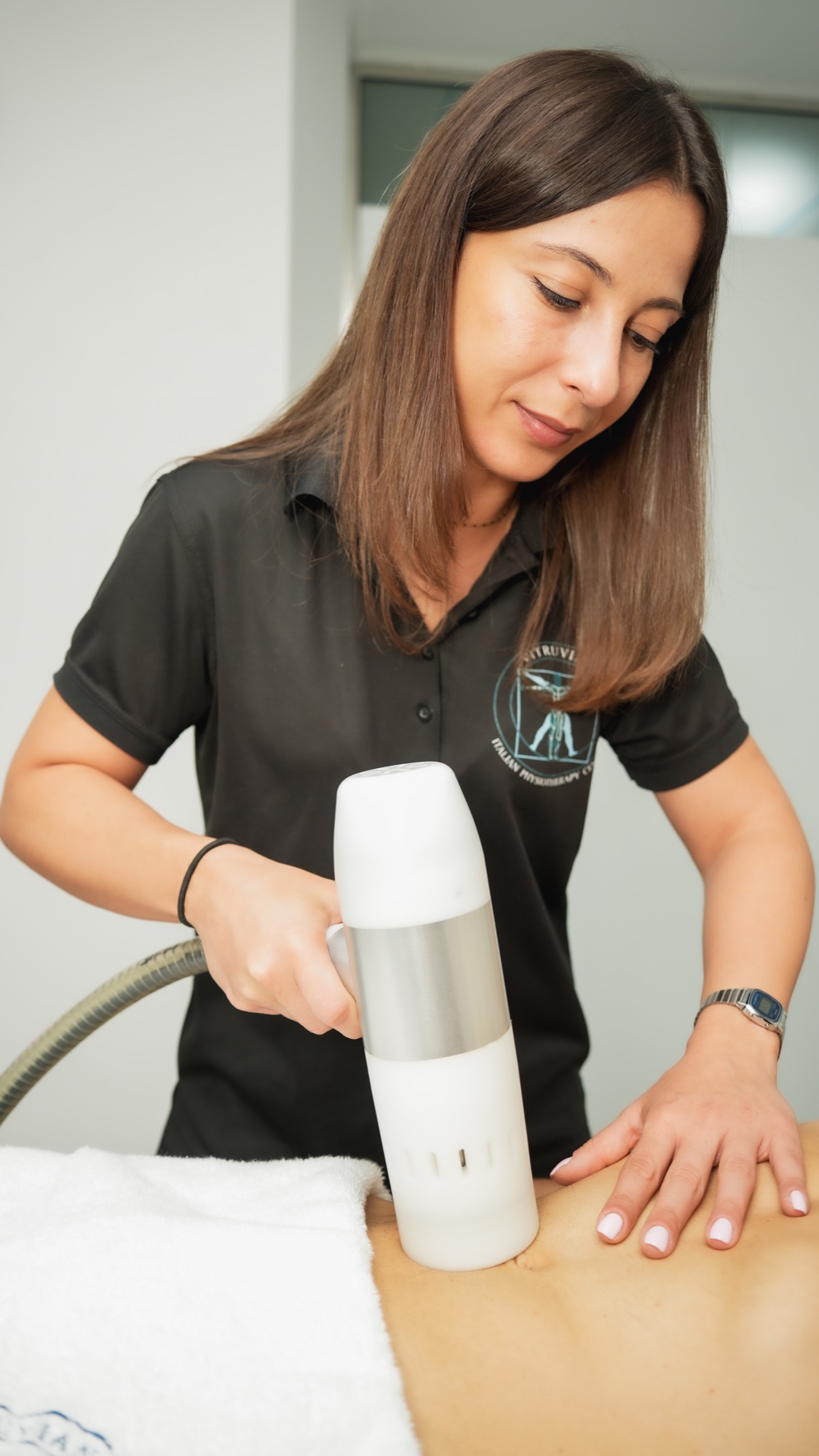
A specialised handheld device delivers acoustic waves through the skin and into the targeted tissues. These waves create controlled mechanical stimulation in the treatment area.
This process may help to:
The intensity can be adjusted throughout the session, allowing the physiotherapist to work according to the patient’s tolerance.
Shockwave therapy may be recommended for a range of aesthetic and tissue-related concerns, including:
It is important to understand that shockwave therapy does not provide an instant or guaranteed cosmetic result. Improvements are generally gradual and depend on the condition being treated, the treatment programme and the patient’s individual response.
Cellulite can create a dimpled or uneven appearance, commonly affecting areas such as the thighs, hips and buttocks. It is associated with the structure of the connective tissues, circulation, fluid retention and the arrangement of underlying fat.
Shockwave therapy may support improvements in skin texture by stimulating circulation and tissue metabolism. It may also encourage tissue remodelling and improve the elasticity of the treated area.
For some patients, shockwave therapy may be combined with radiofrequency or manual techniques as part of a wider cellulite management programme.
Fibrosis can occur when tissue becomes firm, thickened or restricted. It may develop following surgery, trauma, inflammation or changes in tissue healing.
Within dermatofunctional physiotherapy, shockwave therapy may be used to stimulate affected tissues and support improved flexibility. The mechanical energy may help address localised stiffness and encourage gradual tissue remodelling.
Treatment must be performed carefully, particularly following surgery. The physiotherapist will assess the area and determine whether the tissue has healed sufficiently.
Scars and tissue adhesions can affect both appearance and movement. Shockwave therapy may be included in a scar rehabilitation programme to improve tissue mobility and reduce localised restriction.
It may also be used during post-surgical rehabilitation to support circulation and address areas of fibrosis. Treatment will only be recommended when appropriate for the stage of recovery.
A contact gel is placed over the treatment area before the handheld device is applied. You will feel a series of rapid mechanical pulses.
The sensation varies depending on the sensitivity and condition of the tissues. Some areas may feel mildly uncomfortable, but the intensity can be adjusted.
Most patients can return to their normal daily routine after the appointment.
The number of sessions depends on your condition, treatment goals and response. Your physiotherapist will recommend a personalised treatment programme after the initial assessment.
Some patients notice gradual improvements after a few sessions. Results vary depending on the condition, severity, lifestyle habits and adherence to the recommended programme.
No. Most patients can resume their normal activities immediately. Temporary redness, tenderness or sensitivity may occur but usually resolves quickly.
Yes. It may be combined with radiofrequency, cavitation and manual dermatofunctional techniques when clinically appropriate.
The same general technology may be used, but the treatment goals, settings and areas treated are different. Aesthetic shockwave therapy focuses on skin quality, fibrosis, cellulite and tissue remodelling.
Directly in our schedule