Ask AI About This Page





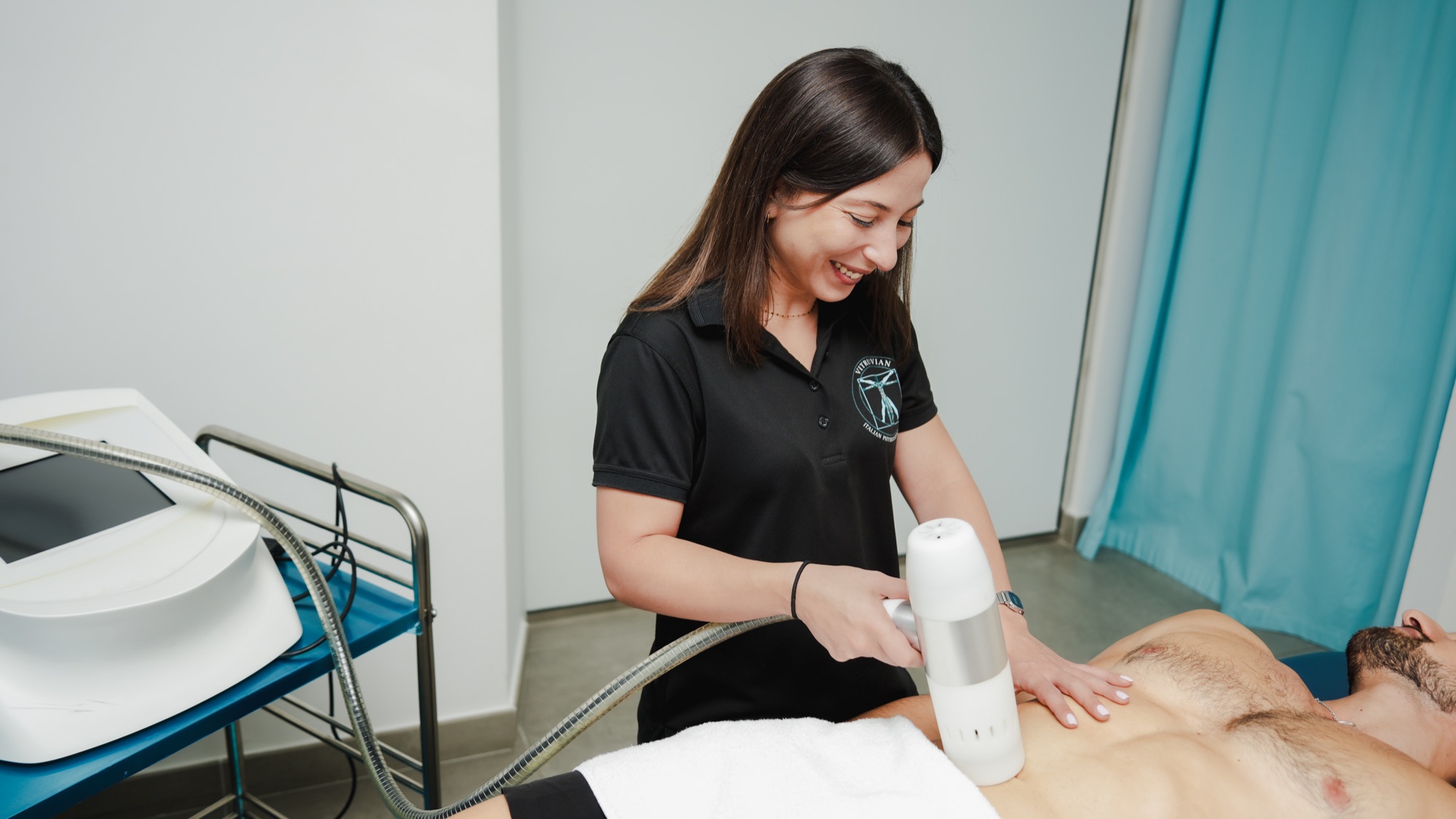
Every programme begins with a comprehensive assessment of your skin and underlying tissues, allowing us to understand your concerns, identify tissue changes and define the most appropriate treatment approach.
Your treatment plan is tailored to your individual needs, tissue condition and aesthetic goals. Our physiotherapists select the most appropriate techniques and technologies to create a targeted and personalised programme.
Our dermatofunctional physiotherapy programmes combine clinical expertise with advanced technologies designed to support skin quality, circulation, tissue remodelling and body contouring.
Your progress is monitored throughout the programme, allowing treatment to be adapted as your tissues respond. Personalised advice on hydration, movement, physical activity and aftercare is also provided to help support and maintain your results.
Aesthetic Physiotherapy, also known as Dermatofunctional Physiotherapy, is a specialised area of physiotherapy focused on improving the health, function and appearance of the skin and underlying tissues. It can help improve circulation and lymphatic drainage, reduce swelling and tissue restrictions, support scar and fibrosis management, and enhance skin quality and body contour.
At Vitruvian Italian Physiotherapy Center, our Dermatofunctional Physiotherapy treatments include Radiofrequency Therapy, Shockwave & Vacuum Therapy, and Cavitation Therapy, supported by specialised manual techniques when appropriate.
Following a professional assessment, your physiotherapist will create a personalised treatment programme based on your tissue condition, individual needs and aesthetic goals.
Dermatofunctional Physiotherapy can play an important role in post-surgical recovery, helping to reduce swelling, improve circulation and tissue mobility, and manage scar restrictions, adhesions and fibrosis.
Treatment is personalised and introduced at the appropriate stage of healing following a professional physiotherapy assessment.
The number and frequency of sessions vary depending on your individual needs, treatment area, tissue condition, goals and response to treatment.
Following your initial assessment, your physiotherapist will recommend a personalised treatment programme and monitor your progress throughout.
Dermatofunctional Physiotherapy treatments are generally comfortable and well tolerated. Depending on the technique and treatment area, you may experience warmth, pressure or mild temporary sensitivity.
Treatment intensity is always adjusted to the condition of the tissues and your individual comfort throughout the session.
Results develop progressively and vary from person to person depending on the condition being treated, tissue characteristics, treatment programme and individual response.
Lifestyle factors such as hydration, nutrition, physical activity and consistency with the recommended treatment plan can also influence progress and help support longer-lasting results.
Directly in our schedule

Al Ameri Tower, Al Tabee'a 1 Street, 3rd Floor, Unit 301
Barsha Heights - Tecom
© Copyright 2024. All rights reserved. Site by CorpStation