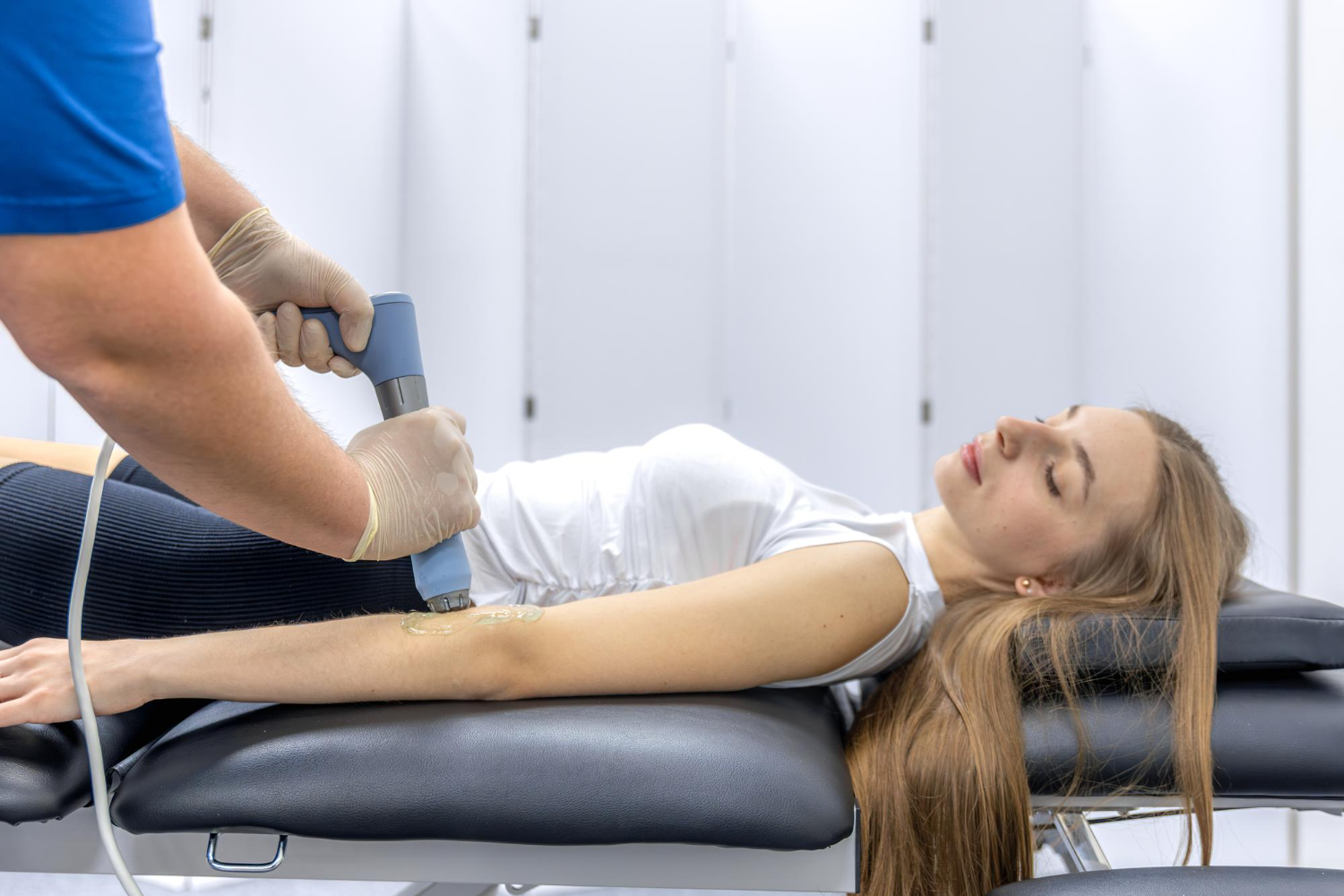
Ultrasound therapy Dubai can be used as a physiotherapy modality to support the management of certain musculoskeletal conditions. At Vitruvian – Italian Physiotherapy Center, the suitability of ultrasound therapy depends on the patient’s condition, symptoms, and rehabilitation goals.
Therapeutic ultrasound Dubai uses high-frequency sound waves to deliver acoustic energy to targeted tissues as a non-invasive physiotherapy modality. Therapeutic ultrasound is not the same as diagnostic ultrasound used for medical imaging. When clinically appropriate, a physiotherapist may use therapeutic ultrasound as part of an individualized treatment plan.
This blog explains how therapeutic ultrasound works, its potential effects on the body, and what to expect when you receive ultrasound therapy at Vitruvian – Italian Physiotherapy Center in Dubai.
What Exactly Is Ultrasound Therapy In Physiotherapy?
These sound waves can reach tissues beneath the skin, depending on the treatment frequency and application settings.
When the sound energy reaches the targeted tissue, it can produce mechanical effects and, depending on the treatment settings, localized heating. These effects may influence local physiological processes, although the clinical benefits vary depending on the condition being treated. Whether you have a muscular strain, tendinopathy, or joint stiffness, ultrasound therapy may be considered as part of a broader treatment plan when clinically appropriate.
How Does The Ultrasound Therapy Device Look?
To understand how ultrasound therapy works, it is helpful to know what the equipment looks like. The main components include:
- The Machine: The main console is where the physiotherapist configures the treatment settings, such as frequency, intensity, and mode.
- The Applicator: A handheld instrument with a smooth treatment head that the physiotherapist moves gently over the skin.
- The Coupling Gel: The physiotherapist applies coupling gel to your skin. The gel helps eliminate the air gap between the applicator and skin, improving the transmission of acoustic energy into the underlying tissues.
How Does Therapeutic Ultrasound Work?
Sound waves above the upper limit of human hearing are known as ultrasound. Therapeutic ultrasound used in physiotherapy commonly operates at frequencies such as 1 MHz and 3 MHz.
Ultrasound treatment Dubai can be non-invasive and is generally well tolerated when appropriately applied by a trained physiotherapist. Here’s a step-by-step explanation of what generally happens during an ultrasound therapy session:
1. Production of High-frequency Sound Waves (the Piezoelectric Effect)
The ultrasound device uses an alternating electrical signal. The electrical signal is delivered to the transducer inside the applicator head.
Behind the applicator’s smooth surface is a piezoelectric crystal. When electrical energy reaches it, the crystal rapidly expands and contracts.
This quick vibration generates mechanical pressure waves and high-frequency sound waves.
Therapeutic ultrasound commonly operates at 1 or 3 megahertz (MHz), depending on the device and treatment settings. Lower frequencies, such as 1 MHz, are generally used when greater tissue penetration is desired, while deep tissue ultrasound therapy Dubai may be considered when clinically appropriate. The appropriate setting depends on the treatment area and clinical goal.
2. Transmission of Sound Waves
For acoustic energy to reach the targeted tissue effectively, the applicator must maintain good contact with the skin. Coupling gel helps facilitate this transmission.
Air is a poor medium for transmitting acoustic energy; therefore, sound waves do not travel effectively through it. Air interferes with the transmission of ultrasound energy, which is why direct contact between the applicator and skin is important.
The coupling gel helps eliminate this air gap, allowing acoustic energy to pass more effectively from the transducer into the tissues.
Thermal Vs. Non-Thermal Effects of Therapeutic Ultrasound
When therapeutic ultrasound is applied to tissue, it may produce thermal and non-thermal effects, depending on the treatment settings.
Thermal Effects (Deep Tissue Heating)
The device’s continuous mode delivers ultrasound energy continuously, which can increase tissue temperature when appropriate treatment parameters are used. This thermal effect may influence tissue extensibility and local physiological processes.
Non-Thermal Effects (Cellular Mechanics)
In pulsed mode, ultrasound energy is delivered intermittently. This lowers the average energy delivery and can reduce thermal effects compared with continuous application. Pulsed ultrasound may be considered when minimizing heating is a treatment goal, depending on the condition and clinical assessment.
What Is The Mechanism Of Healing By Ultrasound Therapy?
Research on therapeutic ultrasound has examined its thermal and non-thermal effects, but its clinical effectiveness varies depending on the condition and treatment protocol. Its effects depend on the specific treatment parameters and how the targeted tissues respond during treatment.
Thermal Effects (The Deep Heat)
Therapeutic ultrasound can produce thermal effects when acoustic energy is absorbed by tissues, which increases tissue temperature under appropriate treatment conditions. The extent of heating depends on the treatment parameters and the tissues being treated.
What Are the Benefits?
- May help reduce joint stiffness in selected conditions.
- For some patients, ultrasound therapy for muscle pain Dubai may help relieve discomfort.
- May help reduce muscle tension when clinically appropriate.
- May help reduce muscle spasm when clinically appropriate.
Non-Thermal Effects
Therapeutic ultrasound can be applied using settings that minimize thermal effects. Non-thermal effects such as acoustic streaming and cavitation have been proposed as mechanisms through which therapeutic ultrasound may influence cellular and tissue processes.
What are the benefits?
- May influence cellular and tissue processes, depending on the treatment parameters.
- May be considered as part of treatment for selected conditions, depending on clinical assessment.
The choice between thermal and non-thermal settings depends on the condition being treated, clinical assessment, treatment goals, and the intended treatment effect.
| Condition | Ultrasound Approach | How It May Work |
| Ankle Sprain | Non-Thermal (Cellular) | May be considered when minimizing thermal effects is appropriate, depending on the condition and clinical assessment. |
| Tennis Elbow | Non-Thermal (Cellular) | May influence local tissue processes, although clinical effects vary depending on the condition and treatment plan. |
| Joint Stiffness | Thermal (Deep Heat) | Thermal effects may temporarily influence tissue extensibility and may be considered alongside stretching and other rehabilitation techniques. |
| Acute Muscle Strain | Non-Thermal (Cellular) | May influence local tissue processes, depending on the injury and overall rehabilitation plan. |
| Scar Tissue and Restricted Mobility | Non-Thermal (Cellular) | Thermal effects may temporarily influence tissue extensibility and may be considered alongside other rehabilitation techniques. |
What Conditions Can Therapeutic Ultrasound Help Manage?
The ultrasound settings can be adjusted according to the treatment goals and clinical assessment. A physiotherapist can adjust the treatment intensity, frequency, and mode according to the condition, treatment area, and clinical goals. Ultrasound therapy for back pain Dubai may be considered for selected musculoskeletal conditions, depending on the individual’s clinical assessment and rehabilitation needs.
- Ligament sprains
- Muscle strains
- Tendinopathy
- Joint stiffness
- Selected soft-tissue conditions, depending on clinical assessment
Tissue injuries are unique to each individual, as are their rehabilitation needs. Vitruvian – Italian Physiotherapy Center’s physiotherapists assess your symptoms and condition to determine whether ultrasound therapy is appropriate as part of your treatment plan.
Conclusion
Therapeutic ultrasound is a non-invasive physiotherapy modality that may be considered for selected musculoskeletal conditions. It uses high-frequency sound waves to deliver acoustic energy to targeted tissues and may be included in a broader rehabilitation plan when clinically appropriate. Choosing the best ultrasound therapy in Dubai should depend on your clinical assessment, individual condition, and rehabilitation needs.
Ultrasound therapy for injury recovery Dubai may be considered according to the individual’s condition and treatment goals.
If you are considering an ultrasound physiotherapy clinic Dubai, an assessment can help determine whether ultrasound therapy is appropriate for your symptoms and treatment goals. Vitruvian – Italian Physiotherapy Center provides individualized physiotherapy assessments to help determine an appropriate treatment approach based on your needs.
https://share.gemini.google/PVgABPZjZe3y
FAQs
What is the thermal effect of therapeutic ultrasound?
The thermal effect occurs when tissues absorb ultrasound energy and convert it to heat. This controlled increase in tissue temperature may promote tissue extensibility, influence local blood flow, and help reduce muscle stiffness. Physiotherapists carefully adjust the ultrasound settings to manage the amount of heating and target the appropriate tissues.
Does therapeutic ultrasound create effects without heating the tissue?
Yes. When used appropriately, therapeutic ultrasound can produce non-thermal effects. These mechanical effects may include acoustic streaming and cavitation, which have been proposed as mechanisms that can influence cellular and tissue processes without causing a significant increase in tissue temperature. Pulsed ultrasound may be considered when minimizing heating is a treatment goal.
How does ultrasound energy reach deeper tissues?
The ultrasound applicator transmits sound waves through a coupling medium, often a gel, allowing energy to travel more efficiently from the device to the skin. As the waves penetrate the tissues, they are absorbed at different levels depending on tissue characteristics and treatment parameters. Treatment settings are selected based on tissue depth, the treatment area, and therapeutic goals.
What determines how effective therapeutic ultrasound is?
Its effectiveness depends on various factors, including the condition being treated, tissue characteristics, frequency, intensity, treatment duration, and application method. In addition, the physiotherapist considers the patient's symptoms and response to treatment. Therapeutic ultrasound is generally used as part of a broader rehabilitation plan rather than as a standalone treatment.