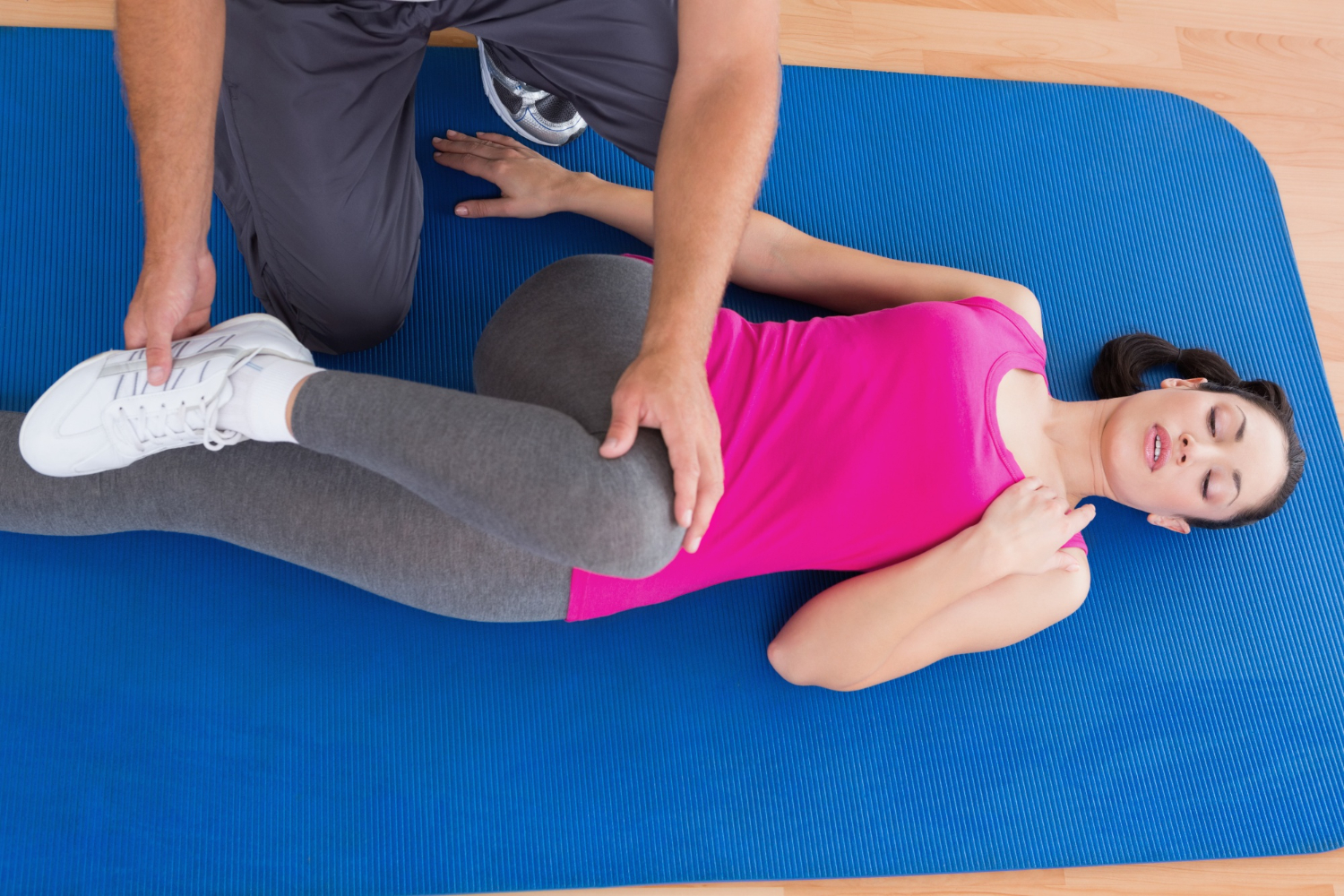
Tight pelvic floors often result in discomfort, urgency, or insufficient emptying because they are unable to completely relax. Leaking, heaviness, or vaginal flatulence are common symptoms of a weak pelvic floor, which is unable to provide sufficient power on demand. Standard Kegel exercise instructions frequently exacerbate problems because many individuals experience a combination of both conditions.
Your pelvic floor might not be weak if you’ve ever been instructed to “just do your Kegels” and discovered that it made matters worse or that nothing changed at all. It could be tight. Alternatively, it may be both. Many people believe squeezing harder is the only solution, yet much general pelvic floor advice focuses mainly on weakness as the main issue. Typically, the clinical picture is more complex. Before starting potentially inappropriate workouts, women who suspect something is wrong should read this blog to understand the pattern. Patients with these concerns are commonly assessed at Vitruvian – Italian Physiotherapy Center in Dubai, a center for pelvic floor physiotherapy Dubai, where a physiotherapist performs a detailed assessment to identify the underlying pelvic floor dysfunction.
What is the pelvic floor?
The bladder, colon, and (in women) uterus are supported by the pelvic floor, a hammock of muscles, ligaments, and connective tissue, which is the focus of pelvic health physiotherapy in Dubai.
It extends from the pubic bone in front to the tailbone behind, at the base of the pelvis. There are two primary levels. The levator ani group, which does the majority of the supporting function, is the deep layer. Surrounding the urethra, vagina, and anus, the superficial layer aids in sphincter control and sexual response.
There are four functions of the pelvic floor. The bowel and bladder remain continent. It protects the pelvic organs from intra-abdominal pressure and gravity. It is a component of how the body uses the trunk to control posture, respiration, and the core. Additionally, it affects sensation and sexual function. You begin to notice the pelvic floor, frequently for the first time, when any one of those tasks becomes difficult.
Tight vs weak: why the difference matters
Over-contracted pelvic floors are unable to fully relax, and this issue is often addressed in pelvic floor therapy Dubai. On demand, a weak pelvic floor is unable to produce sufficient force. Many people experience both.
In clinical terms, these patterns are referred to as hypotonic (too little force output) and hypertonic (too much resting tone). In a neat sense, they are not opposites. When you cough or lift heavy objects, your pelvic floor may remain at a high resting tone, never fully relaxing, and yet be unable to generate a powerful contraction. A muscle’s working range is reduced when it is kept shortened.
The majority of online advice is incorrect in this regard. During assessment, many patients cannot tell whether they are relaxing or squeezing their pelvic floor muscles because muscle control cues often feel confusing. Many people have been performing Kegel exercises daily for years, believing they should be beneficial, but they have simply increased muscle tension when the muscles actually needed to relax and lengthen. The clinical insight here is straightforward. Symptoms indicate that a problem may be present. They don’t identify the pattern that is causing it.
How to tell if your pelvic floor is tight
Indicators of a tight pelvic floor include pain during intercourse, urgency when urinating, incomplete emptying, constipation, and the sensation that you can’t shut off down there.
At Vitruvian – Italian Physiotherapy Center, a leading provider of pelvic floor treatment Dubai, we commonly observe the following clinical patterns:
- Pelvic examinations or penetration-related pain. This pain is frequently described as a “wall,” a burning sensation upon entry, or a severe ache that follows. Patients in their late twenties and early thirties frequently experience vaginismus or anxiety.
- You experience frequent, urgent urination without infection. You go “just in case” many times before leaving home, at work, and before a meeting because your bladder is twitchy. A pelvic floor that does not relax properly may contribute to irritation around the urethra and bladder neck.
- Your bowel or bladder doesn’t empty. After you’re done, you get up, and two minutes later, you feel like you have to go again. Stool straining is a regular occurrence.
- Sense of unfinished evacuation and constipation. Stool cannot travel through a pelvic floor that is not relaxed.
- Persistent lower back, hip, or pelvic discomfort that has not improved with conventional musculoskeletal therapy.
- Pain that may worsen during periods of increased stress. In Dubai, many people under chronic stress unconsciously tighten their pelvic floor muscles
These are not a diagnosis; they are hints. During an examination, a qualified physiotherapist can verify what is truly occurring. This type of evaluation helps the physiotherapist determine the underlying pelvic floor dysfunction.
How to tell if your pelvic floor is weak
Leaking when you cough, sneeze, or exercise is commonly managed with pelvic floor therapy for incontinence Dubai approaches, feeling heavy; vaginal flatulence (commonly known as queefing); and having less sensation during sex are all indicators of a weak pelvic floor.
Although they are simpler to identify, the traditional weakness patterns are nonetheless frequently misinterpreted.
- Incontinence under stress. Leaking when you laugh, sneeze, cough, jump, or lift. This type of incontinence is prevalent among women returning to jogging or in postpartum recovery, often addressed through postpartum pelvic floor therapy Dubai programs, as well as among postpartum patients.
- Mixed or urgent leakage. A sudden urge to urinate is difficult to resist, and occasionally you leak before you get to the bathroom. Hypertonic patterns may coincide with such symptoms.
- Vaginal dragging, bulging, or heaviness, especially after exercise or at the end of the day. This symptom is frequently the initial indication of mild prolapse.
- Reduced sensation during sex, including reduced ability to grip or release intentionally.
- Vaginal flatulence, or queefing. This is where the question in the brief becomes relevant. Queefing may be an indication of a less-toned pelvic floor that facilitates airflow. It can also occur when air is trapped in the upper vagina and then released by a tight pelvic floor. Exercise type and position are also important. To put it another way, queefing is not a diagnosis in and of itself but rather a signal worth looking into.
These are the symptoms to monitor if you are leaking, feel heavy, or have observed a change following pregnancy or menopause. This is one of the conditions that are assessed and treated at Vitruvian – Italian Physiotherapy Center in Dubai.
Can you have both at the same time?
Indeed. General Kegel advice frequently exacerbates problems because certain areas of the pelvic floor might be weak while others are tight.
The pelvic floor does not behave consistently and is not a single muscle. While the back portion (around the anus) is unable to produce force, the front portion may be working harder than normal. Alternatively, the right side may not engage while the left grips. The pelvic floor has to learn two distinct things in two separate zones when you include postural patterns, breath-holding, scar tissue from an episiotomy or C-section, and a history of bracing.
This explains why a one-size-fits-all program frequently fails and highlights the need for pelvic floor dysfunction treatment Dubai. Pain and urgency may increase if a muscle that is already excessively tight is strengthened. Relaxing an already weak muscle without restoring strength may worsen leakage during activities such as sneezing. The pattern is important. The treatment approach should match the pattern.
A simple self-check you can do at home
Try to gently contract and then relax the muscles surrounding the back canal while sitting comfortably and exhaling softly. Take note of your ability to let go.
This is not a diagnosis, but rather a screening hint. Stop doing anything that hurts.
- Take three deep breaths while sitting upright on a sturdy chair with your feet flat. With every breath, feel your lower abdomen relax.
- Gently pull up and forward on a gradual exhale, as though you’re trying to prevent passing gas. For two seconds, hold. Avoid excessive effort or straining.
- Let go now. The majority of people skip this section. Is there a distinct release, a softening, or a feeling that the muscles are lowering themselves again?
What do you learn from it? You may need to improve your awareness or strength if you are unable to feel any contraction at all. Tightness is indicated if you can contract but are unable to feel a release. Don’t push through if the contraction hurts. A hands-on examination is the only way to validate what is happening in each area of the pelvic floor, and none of this can replace it.
How to relax tight pelvic floor muscles
Try diaphragmatic breathing in a supported child’s pose to ease a tense pelvic floor. Pay attention to extending rather than contracting with each inhale.
Techniques that educate a held muscle to release are collectively referred to as “down-training” in pelvic floor rehabilitation Dubai. The goal is not to make the pelvic floor excessively relaxed. The goal is to reestablish the whole range so that relaxations are complete and contractions are clean. The intricacies of female anatomy are important here, especially with regard to scar tissue, childbirth, and menopausal changes. The same concept is commonly explained as releasing the pelvic floor muscles.
Methods used at Vitruvian – Italian Physiotherapy Center in Dubai include the following:
- Breathing via the diaphragm when supported. Side-lying with a cushion, child’s position, or constructive rest (lying with feet flat and knees bent). Each inhalation encourages the pelvic floor to lengthen naturally, and each exhalation allows it to return to its resting position. Avoid squeezing.
- Kegel exercises in reverse. a purposeful, soft “opening” or lowering of the pelvic floor, frequently accompanied by an inhale. This helps you recognize when you have difficulty relaxing the muscles.
- Manual release work, either internal or external. practical methods used by a pelvic health physiotherapist to treat certain scar tissue, trigger points, or tight bands. This is the difficult portion to complete on your own.
- Nervous system regulation. Many hypertonic presentations are caused by stress and holding one’s breath. Often, vagal training, breathwork, and treating the broader posture and movement pattern are more important than any particular treatment.
This is where to start if pain is one of your symptoms.
How to strengthen a weak pelvic floor
Do fast flicks and slow squeezes (around 10-second holds) every day to improve a weak pelvic floor, but only after you’ve made sure you can relax completely.
In pelvic health physiotherapy practice, including women’s pelvic floor rehab Dubai, supervised pelvic floor muscle training is commonly recommended as a first-line approach for stress and mixed urinary incontinence, usually for at least three months. A traditional program typically combines long holds with quick contractions several times per day for approximately twelve weeks.
The most important guideline is to relax first, then squeeze. Your resting tone will increase, and your symptoms may worsen if you are unable to completely relax in between contractions. For this reason, following an examination, an individualized treatment program nearly always outperforms a generic exercise routine.
When to see a pelvic health physiotherapist
If symptoms are uncomfortable, interfere with everyday activities, sleep, or intimacy, or last longer than four to six weeks of self-management, see the best pelvic floor physiotherapy in Dubai for an accurate assessment.
A qualified pelvic physiotherapist in Dubai can conduct a thorough history, perform an internal and external examination, and develop a program customized to your unique results. A thorough history, an internal and external examination (with the patient’s consent), and a program customized to your unique results usually form part of your assessment. Patients from across Dubai come to Vitruvian – Italian Physiotherapy Center for assessment and treatment. You will have a clear understanding of the cause of your problems and a strategy to work on and follow between sessions.
During a pelvic health assessment, a physiotherapist determines the underlying cause of symptoms and develops an individualized treatment plan.
Ready to find out which pattern is yours?
A tight pelvic floor and a weak pelvic floor require very different plans, and your situation is unique. A pelvic health physiotherapist can identify your pelvic floor pattern through a comprehensive assessment and recommend a personalized rehabilitation plan.
https://www.perplexity.ai/search/91066c69-7ad5-4189-a061-3b994529c97a
FAQs
Can a tight pelvic floor feel weak?
Indeed. A persistently tight pelvic floor feels weak because it sits in a shortened posture and is unable to produce force when needed. Kegel exercises are not a universal solution since strengthening them without first restoring length typically exacerbates problems.
Does queefing mean my pelvic floor is weak?
Not always. Queefing can be a sign of decreased pelvic floor tone, but it can also occur when the pelvic floor is tight, trapping and then releasing air, or only in specific postures during intimacy or exercise. It is not an automatic diagnosis, but rather a signal worth evaluating.
How long does it take to relax a tight pelvic floor?
Recovery time varies, although many people experience gradual improvement over several weeks when treatment is appropriate. However, many people see an improvement after 2 to 4 weeks of constant training (breathwork, positional release, and nervous-system regulation).
Can I do Kegels if my pelvic floor is tight?
Generally speaking, no, not until you're completely at ease. Pain, urgency, and tension are often made worse by strengthening a pelvic floor that is unable to release tension. Before beginning any strengthening program, a pelvic health physiotherapist can determine which pattern you fit.
Can pelvic floor symptoms change depending on daily activities?
Indeed. Depending on activity levels, stress, exercise, posture, and hydration, pelvic floor symptoms might change throughout the day. While some people suffer symptoms while exercising, others report feeling more uncomfortable after extended periods of sitting. A physiotherapist can determine contributing variables and provide effective treatment techniques by monitoring the onset of symptoms.
Can pelvic floor problems affect exercise performance?
During exercise, pelvic floor dysfunction can affect strength, stability, and movement quality. Some people feel pressure, pain, leaking, or have trouble using their core muscles. A thorough evaluation can assist in developing an appropriate training program by identifying whether performance is being impacted by muscular weakness, excessive stress, or coordination problems.
Is pelvic pressure always a sign of a weak pelvic floor?
Not always. In addition to being associated with weakness, pelvic pressure can also be caused by tense muscles, poor coordination, or other pelvic health issues. A professional examination is necessary to identify the underlying problem and suggest suitable therapy because comparable symptoms might have various origins.
Can breathing patterns affect pelvic floor function?
Indeed. When breathing, the diaphragm and pelvic floor collaborate closely. Normal pelvic floor movement can be interfered with by shallow breathing, holding one's breath, or persistent stress. As part of an all-encompassing rehabilitation program, learning appropriate breathing techniques may assist with relaxation, coordination, and general pelvic floor function.
Should I seek treatment even if symptoms seem mild?
It's important to pay attention to mild symptoms, particularly if they happen frequently. Early management may enhance long-term pelvic health and stop symptoms from getting worse. To promote recuperation and everyday comfort, a pelvic health physiotherapist can evaluate muscle function, pinpoint contributing causes, and offer tailored recommendations.