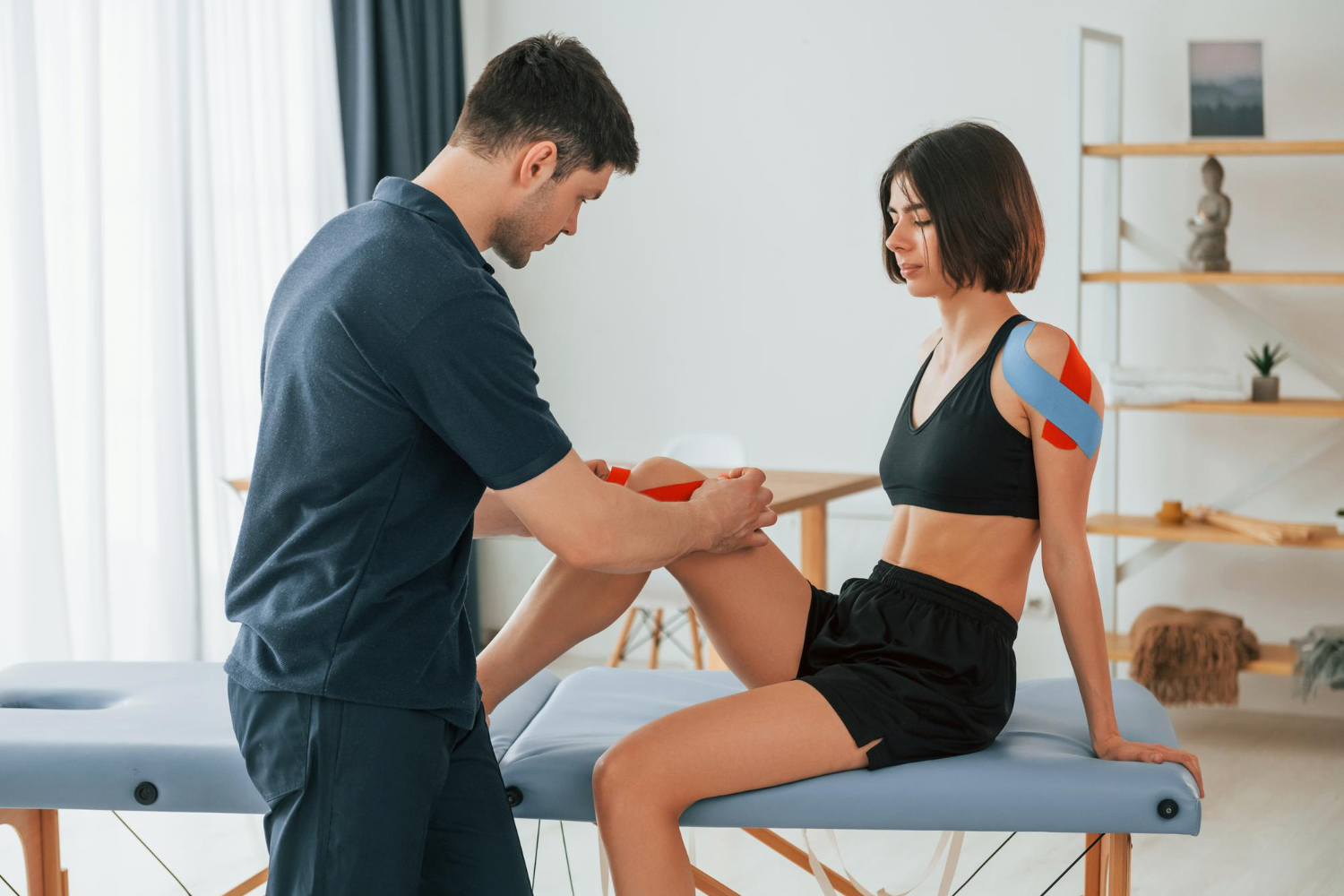
One of the most difficult yet gratifying experiences an athlete or active person can have is recovering from an ACL (anterior cruciate ligament) injury. The path to recovery is a marathon, not a sprint, regardless of whether you have chosen conservative care or surgery.
Our specialty at Vitruvian – Italian Physiotherapy Center includes providing the best ACL therapy in Dubai and helping patients reach each stage of ACL rehabilitation. You may enhance compliance, lessen worry, and eventually return to your favorite sports and hobbies by knowing what to anticipate at each step.
The five crucial phases of ACL rehabilitation are broken down in this blog, along with the importance of physiotherapy.
Stage 1: The Pre-Rehab Phase (Before Surgery)
The fact that rehabilitation begins before surgery surprises many people. This is commonly referred to as prehabilitation.
The Objective: The patient should have a knee that is strong, mobile, and pain-free before surgery. What to anticipate:
- Reducing Swelling: Manual therapy, compression, and elevation are used to reduce joint swelling.
- Restoring Range of Motion (ROM): This involves paying particular attention to complete knee extension (straightening).
- Maintaining strength: This involves keeping the hamstrings and quadriceps active to avoid atrophy.
Pro Tip: Research indicates that patients with greater strength and range of motion before ACL tear surgery Dubai tend to achieve significantly better outcomes six to twelve months later.
Stage 2: The Acute Post-Op Phase (Weeks 0–2)
Protection and “waking up” the muscles are the main goals of the first two weeks following surgery.
The Objective: Following ACL reconstruction surgery Dubai, the priority is to restore fundamental function, control discomfort, and safeguard the graft. What to anticipate:
- Activation of the Quadriceps: Following surgery, the quadriceps muscle often experiences neural inhibition and reduced activation. To restore neuromuscular function, our therapists perform isometric exercises.
- Extension is King: In stage 2, getting the knee precisely straight is crucial to preventing long-term limping, even if bending (flexion) is also vital.
- Training for Gait: Patients learn the proper way to walk with crutches and gradually transition to weight-bearing as tolerated.
Stage 3: Strength and Neuromuscular Control (Weeks 2–12)
The “real work” starts after the initial post-surgical discomfort subsides. In clinic-based physical therapy, this is frequently the longest and most important stage.
The Objective: Develop a foundation of strength and enhance proprioception, or balance. What to anticipate:
- Gradual Loading: Patients progress from bodyweight activities to strength training exercises such as squats, lunges, and step-ups.
- One-Leg Stability: Therapy focuses on retraining the body to use the injured limb effectively for balance and stability.
- Closed Kinetic Chain Exercises: These exercises are safer for the graft following ACL repair Dubai, since the foot remains in contact with the ground throughout the movement.
Stage 4: Impact and Power (Months 3–6)
The knee is not yet ready for sports, even if daily activities may begin to feel normal at this stage. Don’t be one of the many patients who make the mistake of quitting therapy at this point.
The Objective: Introduce running, impact, and explosive motions. What to anticipate:
- Program for Graded Running: A common question patients ask is when can you run after ACL surgery — typically this phase begins with a structured treadmill walk-run progression, gradually increasing pace and duration as the knee allows.
- Plyometric training: Patients are trained to land safely and with control following a jump, reducing impact stress on the knee.
- Agility Exercises: Therapists introduce fundamental lateral movements and directional change drills to rebuild coordination.
Stage 5: Return to Sport and Performance (Months 6–12+)
Building bridges between the field and the clinic is the focus of the last phase.
The objective: Maximize strength, dexterity, and self-assurance. What to anticipate:
- Sport-Specific Drills: For soccer players, sessions focus on pivoting and cutting techniques. For runners, training concentrates on hills and sprint progressions.
- Return-to-Sport Testing: To make sure the knee is prepared, Vitruvian – Italian Physiotherapy Center, a leading ACL surgery clinic in Dubai, uses objective testing, including hop tests and strength ratio assessments.
- Injury Prevention: Our team develops a long-term maintenance plan to protect both the graft and the opposing knee from future injury.
Why Physiotherapy is Non-Negotiable for ACL Recovery
ACL knee surgery recovery is a process that affects more than simply a ligament; ACL damage also alters the way the brain and leg interact.
- Graft Protection: Our therapists are aware of the precise exercises that place stress on the graft and those that protect it during each stage of healing.
- Avoiding Compensations: If you don’t have a physical therapist, you may unconsciously favor your “good” leg, which might lead to hip or back problems.
- The Mental Game: ACL tears are extremely stressful. Having a team of professionals and a structured rehabilitation plan helps patients stay motivated through the inevitable plateaus of recovery. Choosing the right ACL surgery clinic ensures that both the physical and mental aspects of recovery are fully supported.
Start Your ACL Roadmap at Vitruvian – Italian Physiotherapy Center
Our interdisciplinary team in Dubai is prepared to support you throughout this process, whether you are two days after your injury or four months after surgery. To make sure nothing is overlooked, Vitruvian – Italian Physiotherapy Center combines objective testing, professional exercise prescription, and manual treatment.
https://www.perplexity.ai/search/vitruvian-italian-physiotherap-7TWd4lJ_S3Kyiqp0KI84aQ
FAQs
Can I recover from an ACL tear without surgery?
Yes, some patients, known as 'copers', can maintain knee stability without surgical intervention. For these individuals, non-surgical knee treatment Dubai through a structured physiotherapy program emphasizing progressive strength and stability training can support a return to high-level activity. A thorough evaluation at our clinic can help determine whether this is an appropriate option.
When can I start driving after ACL surgery?
Most patients are able to resume driving within two to six weeks, depending on which limb was operated on and their ability to manage the pedals safely.
What activities should be avoided during early ACL recovery?
During the early stages of healing, patients are typically advised to avoid high-impact exercises, jumping, pivoting, and abrupt twisting motions. These movements can place undue strain on the healing knee. Adhering to a structured recovery plan and professional guidance supports safer healing and fewer complications.
Why is swelling management important after an ACL injury?
During the healing process, reducing swelling may enhance knee function, comfort, and mobility. To reduce inflammation, rest, ice application, elevation, and gentle movement are commonly advised. Persistent swelling should not be disregarded since it may impede the course of rehabilitation and postpone a safe return to regular activities.
Can walking too soon affect ACL recovery?
The healing knee may be strained if you walk too soon without the right assistance or medical advice. The severity of the injury and the chosen course of treatment influence recovery timelines. To help restore mobility while safeguarding the knee joint, many patients progressively increase weight-bearing activities under expert supervision.
What role does strengthening play in ACL rehabilitation?
Following an ACL injury, strengthening exercises play a key role in supporting knee stability, muscle function, and movement control. Rebuilding surrounding muscle strength gradually is a common focus of recovery programs. Because rushing physical activity can increase the risk of discomfort or reinjury, consistency and appropriate exercise techniques are crucial.
Is returning to sports immediately after recovery recommended?
It's not always advised to resume sports right away following ACL healing. Before beginning intense physical activities again, many people need to undergo gradual conditioning, balance training, and movement assessment. An appropriate recovery schedule may boost self-esteem, promote knee stability, and lower the risk of further sports-related injuries.