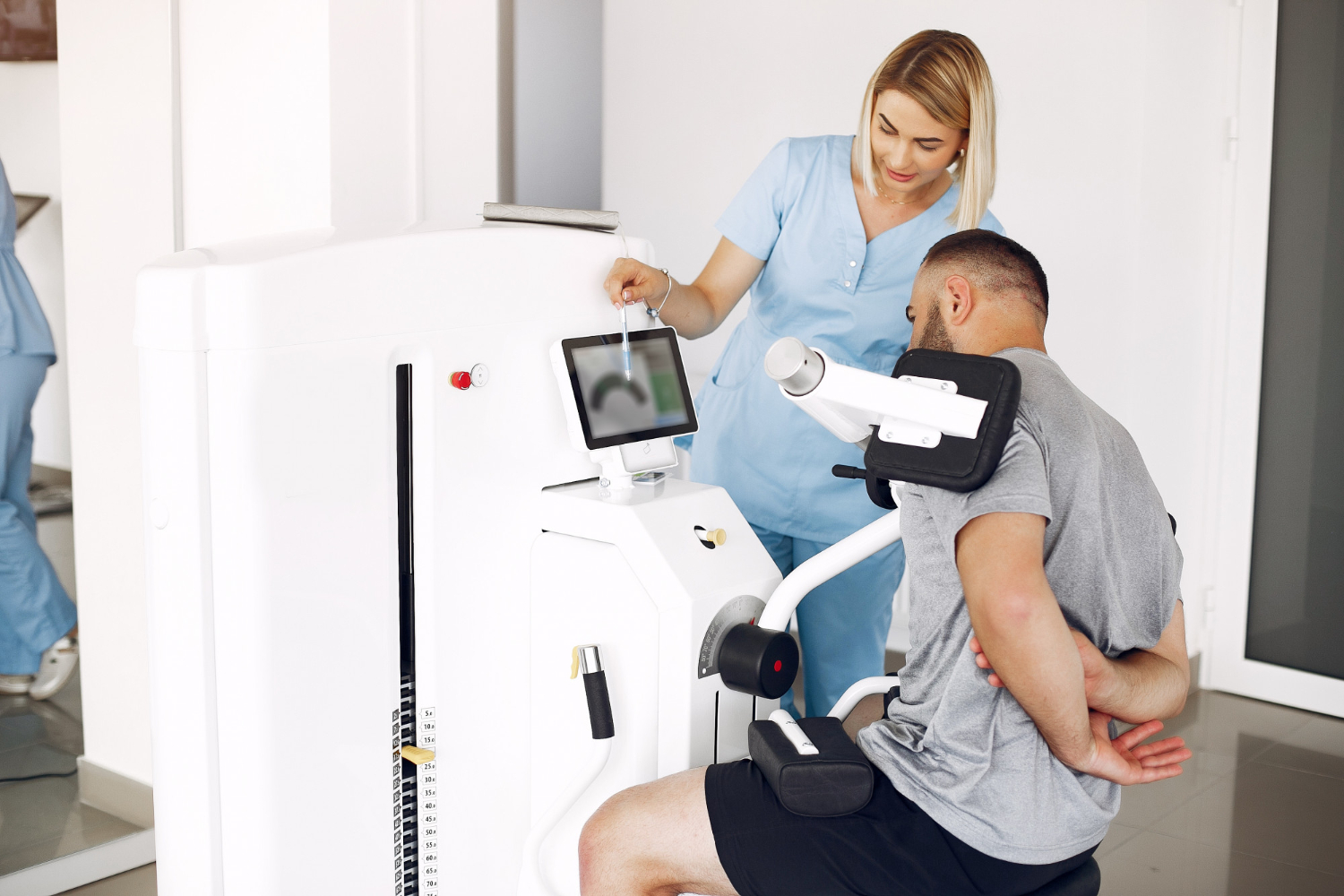
High-frequency sound waves are used in ultrasound treatment Dubai, a reliable physical therapy technique, to relieve musculoskeletal pain and encourage tissue recovery. This therapy, which is frequently administered with conductive gel and a portable probe, provides deep heat to soft tissues, including ligaments, tendons, and muscles, without causing pain. It is frequently advised for managing chronic pain and recovering from injuries.
A qualified therapist uses therapeutic ultrasound Dubai to target inflammation, scar tissue, or limited mobility by varying the sound waves’ intensity based on your condition. The treatment improves tissue suppleness, decreases edema, and promotes circulation. Therapeutic ultrasound helps you heal faster and better during the three main stages of healing: inflammation, repair, and regeneration, especially for tissues that are hurt or healing slowly.
How Does Ultrasound Physical Therapy Work?
Ultrasound Therapy Dubai employs sound wave technology directed into soft tissues to facilitate healing, alleviate discomfort, and enhance mobility. A qualified physiotherapist usually uses specialized equipment to guide the painless procedure.
Important phases in the process:
- To provide the therapy, a metallic ultrasonic probe is utilized.
- To assist sound waves in entering the tissues uniformly, conductive gel is placed on the skin or the probe’s head.
- For five to ten minutes, the probe is moved over the afflicted region in tiny circular motions.
- The therapist changes the frequency and strength of the sound waves based on the therapeutic objective, such as lowering edema, dissolving scar tissue, or improving circulation.
- It’s common for patients to experience some warmth or pulsating feeling when receiving ultrasound therapy.
- Deeply heating tendons, muscles, and ligaments increases tissue flexibility and accelerates the healing process.
- This results in improved pain alleviation, increased flexibility, and functional recovery.
Ultrasound therapy for muscle pain Dubai facilitates enhanced tissue flexibility and promotes faster recovery in tendons, ligaments, and muscles.
Conditions Treated with Ultrasound Therapy in Physiotherapy
Deep tissue ultrasound therapy Dubai is beneficial for both acute injuries and long-term musculoskeletal conditions, as it enhances circulation, tissue extensibility, and natural healing. Both recent injuries and chronic musculoskeletal disorders respond well to this therapy.
Typical ailments that are addressed include:
- Chronic pain syndromes: Aids in the reduction of pain and inflammation in long-term ailments such as myofascial and lower back pain.
- Knee osteoarthritis (OA): Particularly in its early stages, it softens scar tissue, increases joint mobility, and lessens stiffness.
- Frozen shoulder: Increases shoulder capsule flexibility and eases tension, preparing tissues for stretching activities.
- Tendonitis and ligament injuries: Encourages the healing of strained or overworked tendons and ligaments.
- Post-surgical stiffness: Following orthopedic procedures, aids in range of motion restoration and expedites healing.
- Healing from fractures: For slow-healing or non-union fractures, Low-Intensity Pulsed Ultrasound (LIPUS) may be advised to promote healing.
- Soft tissue injuries: Improves function and speeds up recovery by increasing blood flow to damaged muscles.
The treatment parameters that are employed determine the therapeutic benefits of ultrasound, which works best when directed by a physiotherapist who has received specialized ultrasound therapy training.
Benefits of Ultrasound Therapy
There are several advantages to ultrasound treatment for both physical healing and pain management. Patients can benefit from the best ultrasound therapy in Dubai when treatment is administered by qualified physiotherapists in accordance with established clinical protocols.
Key benefits include:
- Deep tissue healing: Sound waves improve healing by promoting cellular tissue repair.
- Improved circulation: Better circulation speeds up the recovery of muscles and joints by increasing blood flow to affected regions.
- Decreased inflammation: Good for controlling persistent inflammation in joints and soft tissues.
- Pain relief: Ultrasound is frequently used to relieve pain, especially that which results from sports injuries and surgeries.
- Increased flexibility: Increases range of motion by releasing tight muscles and scar tissue.
- Breakdown of scar tissue: Aids in reducing adhesions, particularly during the healing process following surgery or an injury.
- Non-invasive and safe: In general, ultrasound therapy is well-tolerated and causes little pain.
Ultrasound therapy for back pain Dubai works especially well for treating postural or chronic pain.
Risks of Ultrasound Therapy
Ultrasound treatment is usually non-invasive and safe when used properly by a qualified physiotherapist. But like with any therapeutic technique, there are some dangers and adverse effects that might happen, especially if the therapy is performed incorrectly or if there is skin sensitivity.
The following are potential hazards during ultrasound therapy:
- Skin irritation or redness: The application site may experience mild redness or pain, which often goes away on its own.
- Localized tissue overheating: Excess heat may accumulate in soft tissues, particularly in regions with poor circulation, if the probe is not moved steadily.
- Tingling or discomfort: During ultrasound therapy, some people may experience a brief pulsating or tingling feeling.
- Ineffectiveness of treatment: The therapeutic effects of focused ultrasound therapy may be diminished by incorrect settings or application.
- Overuse of delicate areas: Although uncommon, frequent use on tendons or joints without expert supervision may result in brief pain.
- Misapplication over weakened skin: Applying ultrasound therapy to rashes, bruises, or freshly treated skin can exacerbate irritation or slow the healing process.
A licensed physiotherapist who is knowledgeable about proper dosage, technique, and patient monitoring must do ultrasound therapy in order to prevent any risks.
How to Prepare for Ultrasound Therapy
Although getting ready for ultrasound therapy is easy, there are a few things you can do to make sure it’s safe and successful. Before the appointment, you will get guidance from a certified physiotherapist.
Advice for preparation:
- For easy access to the treatment region, dress comfortably and loosely.
- Before your session, refrain from putting lotions or creams on the targeted region.
- Tell your therapist about any sensitive skin issues, pregnancy, or medical implants.
- Before the session, drink plenty of water, especially if you’re working on big muscles.
- To establish therapy objectives and expectations with your therapist, arrive a few minutes early.
Your ultrasonic treatment will go more smoothly and effectively if you prepare properly.
What to Expect During Ultrasound Physiotherapy
Your physiotherapist will utilize cutting-edge technology to provide focused sound waves to wounded tissues during ultrasound therapy in order to promote healing and alleviation.
This is what usually occurs:
- Applying conductive gel to the skin or probe aids in the uniform penetration of sound waves.
- For five to ten minutes, the probe is slowly moved in circular movements over the afflicted region.
- Depending on the settings and intensity, you can experience a slight pulse or warmth.
- Depending on your particular situation, the therapist may modify the frequency and depth of the waves.
- Most treatments are noninvasive, painless, and don’t require recovery time.
There are two main ways that ultrasonography is used in physical therapy:
- Deep heating: Improves flexibility, lowers discomfort, and increases blood flow.
- Cavitation: Promotes healing by stimulating cellular activity through the vibrating of microbubbles.
Because of this mix of methods, therapeutic ultrasound applications in clinical rehabilitation programs are quite successful.
What to Expect After Ultrasound Therapy
After ultrasound therapy, the majority of patients report feeling more at ease and experiencing less discomfort. Responses after the session, however, can differ somewhat.
Possible after effects include:
- There may be slight warmth or redness at the site, but this usually subsides quickly.
- Decreased stiffness and increased flexibility, particularly in joints or muscles that have received treatment.
- There is no downtime; unless paired with additional treatments, you can return to your regular activities.
- To improve outcomes, your physiotherapist could suggest drinking or mild stretching.
- Ultrasound therapy for pain in chronic illnesses may need to be administered regularly.
Physiotherapy ultrasound Dubai uses cavitation and deep heating to support tissue repair, improve blood flow, and enhance flexibility.
Who Should Avoid Ultrasound Therapy (Contraindications)
Although ultrasound therapy is generally regarded as safe and efficient, it should be carefully avoided for several medical disorders. These contraindications guard against negative consequences and guarantee patient safety.
The following people shouldn’t get ultrasound therapy:
- Individuals who have cardiac implants or pacemakers, as ultrasound can interfere with electrical impulses and cause problems for the heart.
- Because of the unknown effects on fetal development, pregnant women should avoid applying it to the lower back, pelvis, or abdomen.
- Patients with malignant tumors or active cancer should avoid ultrasound, as it may accelerate metastasis by enhancing cellular activity.
- Metal implants have the potential to overheat and harm surrounding tissues in people who have recently had joint replacements.
- Ultrasound may exacerbate open wounds or unhealed fractures in people, delaying their healing.
- People who have sensitivity to the eyes or reproductive organs: ultrasound should not be used near the eyes, testes, or ovaries.
To guarantee safe and appropriate care, a qualified physiotherapist will always review your medical history before incorporating ultrasound therapy into physiotherapy plans.
How Long Does Ultrasound Therapy Take to Show Results?
The kind and severity of the ailment being treated, together with the frequency of sessions, determine how successful ultrasound therapy is. After only one or two sessions, some patients report a little reduction in pain or stiffness, while others might require several sessions to see a discernible difference.
Average turnaround times:
- Acute injuries (such as sprains or minor inflammation): This may begin to recover after one to three sessions.
- Joint disorders or persistent pain: Usually, improvement happens after four to six regular sessions.
- Recuperation following surgery or scar tissue: Longer therapy regimens spanning several weeks can be necessary.
- Ultrasound treatment for osteoarthritis or tendonitis pain: Frequently yields progressive improvements when used in conjunction with manual therapy and exercise.
Ultrasound’s therapeutic benefits develop gradually; persistence is essential. Depending on how your body reacts, your physiotherapist will track your progress and modify the frequency of treatments.
Choosing the Right Physiotherapy Provider for Ultrasound Treatment
Selecting a certified ultrasound physiotherapy clinic Dubai guarantees that care will be given precisely, safely, and as part of a planned rehabilitation program. In addition to effectively administering the therapy, a skilled physiotherapist will incorporate it into a more comprehensive treatment plan that can also involve manual therapy, stretching, and rehabilitation exercises.
What to look for is as follows:
- Clinical proficiency in the use of ultrasonography in evidence-based physical therapy
- Personalized therapy planning that takes into account your particular mobility objectives and pain points
- Clearly communicating your situation, anticipated results, and self-management techniques
- Holistic approach, making sure ultrasound treatment is utilized as a component of a comprehensive rehabilitation program rather than in isolation
- Continuous monitoring of your development to make sure the treatment is indeed helping you
Trust the Vitruvian-Italian Physiotherapy Center for Safe, Effective Ultrasound Therapy
Experience counts when it comes to a successful recovery. At the Vitruvian-Italian Physiotherapy Center, we provide ultrasound therapy with accuracy, security, and a customized approach. Our physiotherapists are available to help you every step of the way with trustworthy treatment, whether you’re looking for relief from chronic pain, injury recovery, or post-surgical rehabilitation.
You receive individualized care at the Vitruvian-Italian Physiotherapy Center in Dubai that is catered to your particular demands, guaranteeing successful outcomes and comfort during your recuperation process.
Don’t put off beginning your rehabilitation! Contact the Vitruvian-Italian Physiotherapy Center for further information!
FAQs
How many sessions of ultrasound therapy will I need?
Your condition will determine how many sessions you need. While chronic pain or post-surgical healing may take 6–10 sessions to show effects, acute injuries may heal in 2–3 sessions.
Can ultrasound therapy be used with other treatments?
Indeed, in order to enhance healing results and long-term mobility, ultrasound therapy in physiotherapy is frequently coupled with exercises, manual therapy, or rehabilitation regimens.
Are there any side effects of ultrasound therapy?
Treatment using ultrasound is thought to be quite safe. Temporary redness or warmth at the treated region is an example of a minor side effect. When treatment is properly delivered, serious problems are uncommon.
What Is Ultrasound Physiotherapy Treatment and How Does It Work?
To encourage tissue repair and lessen discomfort, Dubai physiotherapy clinics employ ultrasound therapy, a non-invasive therapeutic approach. It makes use of high-frequency sound waves that gently vibrate soft tissues, muscles, and tendons to promote blood flow and cellular healing.
How does physiotherapy help speed up recovery after an injury?
Ultrasound therapy for injury recovery Dubai promotes tissue repair, lowers inflammation, and increases blood circulation to aid with recovery. In professional physiotherapy care, it is frequently utilized for post-injury stiffness, ligament injuries, and muscular strains.
Is ultrasound physiotherapy safe for patients in Dubai’s clinical settings?
Yes, ultrasound therapy is regarded as safe and well-tolerated when administered by a licensed physiotherapist in Dubai. Clinical safety and comfort are maintained during every session by modifying treatment protocols according to individual conditions.
How Does Ultrasound Physiotherapy Support Faster Recovery?
By raising tissue temperature deeply, ultrasound treatment promotes healing by enhancing suppleness, alleviating muscular tension, and quickening the healing process. As a result, patients in Dubai can move about again and perform better.
Who Can Benefit From Ultrasound Physiotherapy Treatment?
Ultrasound physiotherapy treatment in Dubai can help those with soft tissue injuries, tight muscles, decreased joint mobility, and persistent discomfort. Both those who lead sedentary lifestyles and those who are active can benefit from it.